Kitchen and bathroom renovations are amongst the most popular home improvement projects. They’re also the most expensive. But this is why a lot of people take out remodel home loans. But can these be used specifically for kitchen or bathroom upgrades? The short answer is yes. In this article we’ll explain your financing options and which loans are best for remodeling projects.
1. Understanding Remodel Home Loan for Kitchen and Bath Projects
A. Definition and Core Concepts
Remodel home loans are a specialized type of financing designed specifically for home improvement projects. These loans provide you with funds upfront or in stages and are secured by your home’s equity. They can also be offered as unsecured personal loans.
B. Key Advantages of Using Renovation Loans for Kitchen and Bath Projects
These loans have interest rates that are typically 2-5% lower than credit cards, or unsecured personal loans. You may also get tax benefits. For example, interest on a home improvement loan is often tax-deductible. You can also get access to larger sums compared to personal loans. Paying the loan off is also easier. In most cases you can repay in fixed monthly payments over 5-30 years.
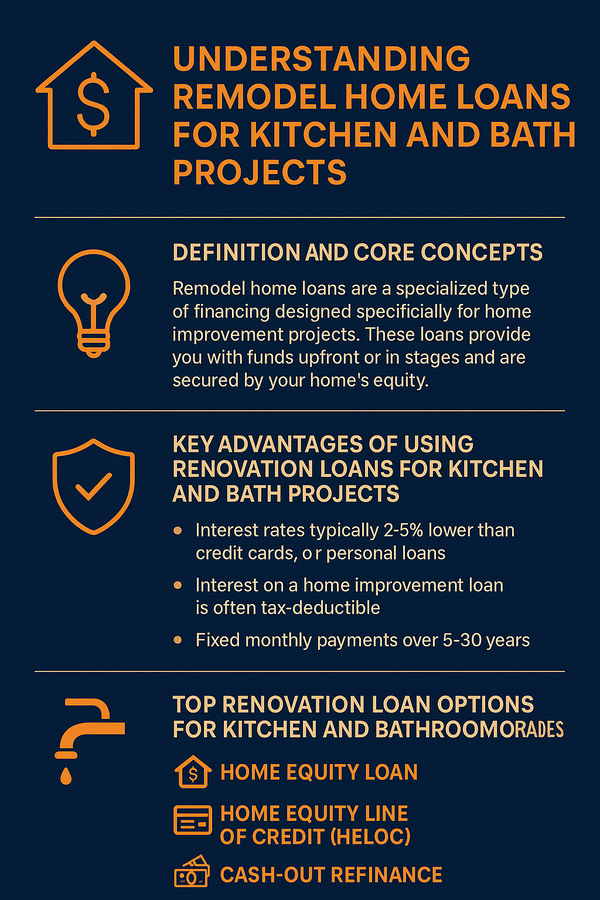
2. Top Renovation Loan Options for Kitchen and Bathroom Upgrades
A. Home Equity Loan
This type of loan is best for people who are doing large kitchen or bathroom renovations. It’s also best if you have known and fixed costs of $15,000 - $100,000. These loans are paid in a lump-sum which is secured by your home's equity. They have fixed interest rates (typically between 8-9%), and can be paid back in 5-30 year repayment periods with fixed monthly payments.
B. Home Equity Line of Credit (HELOC)
HELOC loans are best for phased kitchen/bathroom projects or multiple rooms over time. The biggest advantage of these loans is their flexibility. They allow you to draw out money as you need it. This means it’s possible to draw out funds for the demolition phase and then make additional withdrawals for fixtures, appliances, and finishing work. You only pay interest on the money you’ve withdrawn (usually around 8-9%) and can make repayments over 10-20 years.
C. Cash-Out Refinance for Major Kitchen Bath Renovations
These loans are optimal when your current mortgage rate is higher than the available refinance rates. They’re also good if you’re doing extensive whole-room renovations. They basically replace your existing mortgage with a larger loan and give you the difference in cash. These loans also have the lowest available interest rates (typically 6-7%). Just note that you’ll have to pay new closing costs and will also reset your mortgage term.
D. FHA 203(k) Renovation Loans for Kitchen and Bath Projects
This is a government-backed loan which combines home purchase/refinance with renovation costs. There are two types available:
· Limited 203(k): up to $35,000 for non-structural kitchen/bath improvements
· Standard 203(k): $5,000 or more for structural changes, plumbing, and electrical work
These loans are a good choice for people who are remodeling their kitchen. You can use the money for cabinet replacement, appliance installation, countertop upgrades, as well as flooring and lighting upgrades. To get this loan you’ll have to use FHA-approved contractor. You’ll also need to provide detailed renovation plans.

3. Alternative Financing Options for Smaller Kitchen and Bath Projects
A. Personal Loans for Home Improvement
These loans are best for smaller kitchen and bathroom updates of $5,000 - $50,000. Their biggest advantage is speed. You can get approval and funding within 1-7 days versus 30-60 days for equity loans. The other advantage is that you don’t have to put your home up as collateral. Interest rates are typically 10-20%, based on your credit score and income. You can pay the money back within 2-7 years in fixed monthly payments.
B. Credit Cards and 0% APR Financing
Short term financing can be used strategically for smaller projects under $10,000. The biggest benefit here is that you pay 0% interest for the first 12-21 months. Another option is store financing at home improvement retailers. These retailers often offer 0% financing for 6-24 months. This is a great option for single appliance purchases, vanity replacement, and tile or fixture upgrades. That being said, these loans are risky. You must pay off the balance before the promotional rate expires or face 18-29% interest rates.
C. Specialized Home Improvement Loans
Some renovation companies offer financing partnerships. You also have government programs like Title I loans where you can get up to $25,000 for specific home improvements. Another option is manufacturer financing where appliance and fixture manufacturers provide promotional financing. You can also look into local utility programs. These provide energy-efficient upgrade financing for kitchen appliances and bathroom fixtures.

4. Strategic Planning: Choosing the Right Loan for Your Kitchen or Bath Project
A. Project Cost Assessment and Loan Matching
Which loan is best for your situation? This is best answered by looking at your costs.
· Projects under $10,000: consider personal loans, credit cards, or cash savings
· Projects above $10,000 - $25,000: consider personal loans or HELOC for flexibility
· Projects above $25,000 - $75,000: consider home equity loans or cash-out refinance
· Projects above $75,000: consider cash-out refinance or standard FHA 203(k)
B. Financial Qualification Strategy
Your credit score is critical when taking out a loan. If your score is bad, then you’ll have to do something about it before applying. You’ll also want to do a debt-to-income calculation where you include new loan payments in your affordability analysis. You should also do a home equity assessment. This is required for equity-based loans. The final thing you’ll need is income documentation. This includes things like W-2s, pay stubs, or tax returns for self-employed borrowers.
C. Timeline and Project Planning Considerations
Each type of loan comes with a different processing time. Equity loans take about 30-60 days and personal loans 1-7 days. These time periods should be coordinated with contractor availability and material delivery. If this is a problem, then consider a HELOC or 203(k) loan. With these loans you can withdraw money as the project progresses. Also keep in mind that some loans require permits for electrical, plumbing, and structural work.

5. Cost-Benefit Analysis and ROI Considerations for Kitchen and Bath Renovations
A. Return on Investment by Project Type
With kitchen renovations, minor remodels typically recoup about 70-80% of costs. Bathroom remodels usually return 60-70% of investment. To get maximum ROI, focus on fixtures, lighting, and efficiency upgrades over luxury finishes. Also take local real estate trends into account. These will affect renovation value recovery.
B. Long-term vs. Short-term Ownership Plans
If you’re selling within five years, then consult with a local realtor on market preferences. Long-term owners should focus on personal enjoyment and functionality over pure ROI. Also take your neighborhood into consideration. You want to avoid over-improving beyond neighborhood standards.
6. Application Process and Documentation Requirements
A. Required Documentation for Kitchen & Bath Renovation Loans
When taking out a loan you’ll need financial documents like recent pay stubs, tax returns, bank statements, and employment verification. You’ll also need property information like recent appraisals, property tax statements, and homeowner’s insurance. Project documentation includes detailed renovation plans, contractor estimates, and material specifications. Some people will need credit authorization documents, like permission for credit checks and verification of existing debts.
B. Approval Timeline and Fund Disbursement
The pre-approval process typically takes 1-3 days. Full underwriting takes around 2-6 weeks, depending on your loan type and documentation completeness. Funds will then be released. You’ll get a lump sum for home equity loans and staged withdrawals for HELOC and 203(k) programs. Also note that some loans require inspection approval before funds can be released.

7. Expert Tips and Best Practices for Kitchen and Bath Renovation Financing
A. Maximizing Loan Terms and Rates
Make sure to shop multiple lenders. You’ll want to compare at least 3-5 lenders to get the best rates and terms. Also see if you have the option to lock in rates during the application process. You may also be able to negotiate on closing costs. Some lenders waive fees or offer no-closing-cost options.
B. Budget Management and Cost Controls
It’s important that you plan for contingencies. Make sure to add a 10-20% buffer for unexpected costs and change orders. Also try to save on material and labor costs. Some things you can DIY, while others require professional installation. And don’t forget about permit and inspection costs. Make sure to factor in all regulatory requirements and associated fees.
8. Common Mistakes to Avoid When Financing Kitchen and Bath Renovations
A. Financial Planning Errors
One of the biggest mistakes is over-borrowing. Too many people take on bigger loans than they need and this leads to unnecessary interest payments. They also ignore the total cost of borrowing. You need to focus on the total interest paid over the life of your loan and not just the monthly payments. Another mistake is having an inadequate emergency fund. You should have a fund that covers at least 3-6 months of expenses. Keep this separate from your renovation funds.
B. Project Management Missteps
What mistakes do people make during the actual project? The biggest is having unrealistic timeline expectations. For example, permit approvals and material delays will delay your project. What’s even more important is selecting the right contractor. Make sure to verify their licensing, insurance, and references before you sign a contract. Finally, know how to balance quality vs. budget. Avoid cutting corners on structural or safety elements.

9. Conclusion: Making the Right Choice for Your Kitchen and Bath Renovation Financing
The loan you choose depends on your project scope and timeline. These should align with your personal financial situation and risk tolerance. Also think about your long-term plans for homeownership and ROI expectations. This is why it’s important to compare loan options from multiple lenders. In fact, you may want to consult with your financial advisor or loan specialist for personalized recommendations.