With the rising costs of moving home, there is a growing trend of homeowners who are choosing to renovate rather than relocate. These economic factors are driving an “improve, don’t move” mentality and with rising property values, homeowners are finding renovations more attractive compared to trying to buy a new home.
Unfortunately, renovations are not cheap and depending on the scope of the project, the average cost of renovation ranges from $50,000 to $500,000. This means that unless you have unlimited savings, funding major home improvements can be a real challenge. However, there are remodel home loans that can be used strategically to fund your home renovation.
Understanding Remodel Home Loans
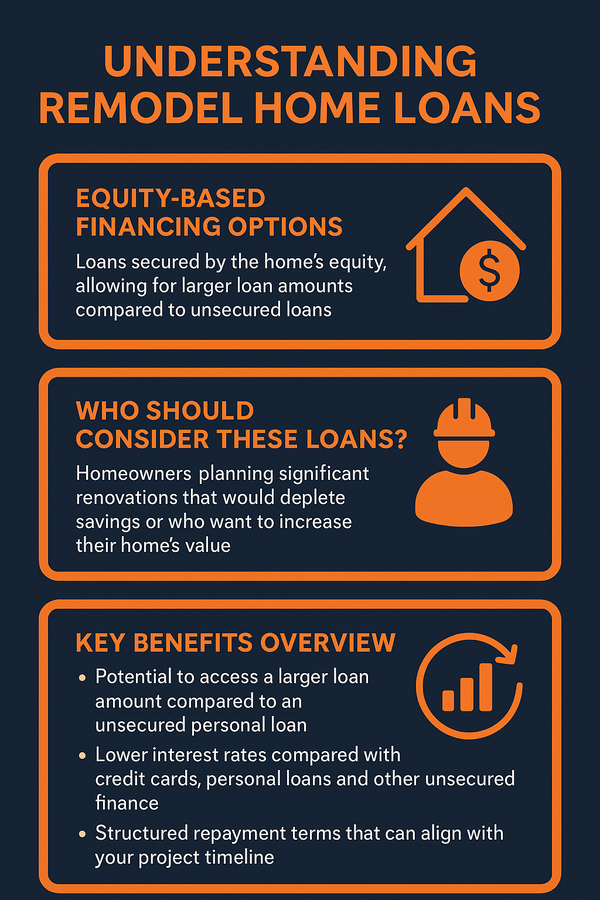
As the name suggests, the umbrella term “remodel home loans” refers to specialized finance products that are specifically designed to fund home improvement projects. Typically, the loan is secured on the property, using the equity built up in the property as a guide to how much you can borrow. This means that there is the potential to borrow higher amounts compared to personal loans.
Additionally, since the loan is secured, there is less risk for the lender. Should you default on the loan, the lender has the option to place a lien or repossess your property to recoup their losses. So, you can expect to pay far lower borrowing rates, particularly compared to many other types of finance including credit cards or personal loans.
Who Should Consider These Loans?
Since this type of loan is quite specialized, it is not the best option for everyone. You should consider a remodel home loan if you are planning significant renovations which would deplete your savings or emergency fund. It can also be beneficial if you are interested in increasing the value of your home by making strategic upgrades or you’ve purchased a fixer-upper property that has renovation potential.
Key Benefits Overview
There are a number of benefits associated with this type of financing including:
- Potential to access a larger loan amount compared to an unsecured personal loan
- Lower interest rates compared with credit cards, personal loans and other unsecured finance
- Structured repayment terms that can align with your project timeline
- Opportunity to increase your home equity if you make strategic improvements
Types of Remodel Home Loans
Since remodel home loans is an umbrella term, it is important to appreciate that there are actually different types of loans, each with their own characteristics, advantages and potential drawbacks.
Equity-Based Financing Options
Home Equity Loans
Home equity loans are a second mortgage that provides a lump sum. You can typically borrow up to 80-90% of your home value minus your existing mortgage, with a repayment term of up to 30 years.
This type of loan typically has a fixed rate, which provides predictable payments, making it a good option if you’re planning a project with a known fixed cost such as a kitchen remodel. However, it is important to remember that there may be closing costs involved.
Home Equity Line of Credit (HELOC)
A HELOC is similar to a home equity loan, but rather than receiving a lump sum, you will have a revolving credit limit based on your home equity. You can typically borrow up to 85% of your home value less your existing mortgage, and you can draw funds as needed.
Generally, you will have a draw period of 10 years to access funds, with 10 to 20 years as the repayment phase when you need to repay the principal loan and associated interest. During the draw period you will only pay interest on the amount borrowed.
HELOCs are a good option if you are uncertain about the renovation costs or have a multi-phase project, where the costs will be spread out over a prolonged period. This means that you can draw the funds as needed and you will only start paying interest on the amount at this point.
Cash-Out Refinance
Cash-out refinancing involves replacing your existing mortgage with a larger loan. You can access an amount that is the difference between your existing mortgage balance and your new loan amount.
Since you’re refinancing, the new interest rate will apply to your entire loan amount, making it a good option if you currently have a high interest mortgage and rates have dropped. However, you do need to be prepared for a longer process, as there will be a full mortgage underwriting procedure to complete before you can access the funds.
Government-Backed Programs
There are also a number of government backed programs that can be used to fund your home renovation project.

FHA 203(k) Rehabilitation Loans
FHA 203(k) loans are designed to finance a home purchase and renovations within one single mortgage. There are two types of 203(k), standard 203(k)s are for major renovations, while limited 203(k)s are for minor improvements.
The loan limits vary by region and area, but in most markets, it is possible to borrow up to $1,209,750. Eligible borrowers can access down payment terms as low as 3.5%, but your improvements need to fit within specific loan guidelines. Eligible improvements include energy efficiency upgrades, structural repairs and room additions.
VA Renovation Loans
VA renovation loans are available to qualifying service members and veterans, providing competitive interest rates with no down payment requirements. You can use a VA renovation loan to make energy efficiency improvements, accessibility modifications and general renovations, but the loan limits vary according to your area.
Alternative Financing Options
Personal Loans for Home Improvement
If the above loan products are not appropriate for your circumstances, an unsecured personal loan may be an option for you. These loans are based on creditworthiness, but there is a potential to borrow up to $100,000. You can expect quick approval and funding, which is typically within a week. However, the rates will be higher compared to secured loans, making them best for smaller projects or as a last resort for borrowers who lack sufficient property equity.
Qualification Requirements and Application Process
While the specific requirements and application process can vary according to the product, there are some common characteristics.

Credit Score Requirements
The minimum scores vary by loan type, but you will typically need 580 or higher for FHA and 620+ for conventional loans. Higher scores will allow you to access better rates, so it is a good idea to take steps to boost your credit before you apply.
Income and Debt-to-Income Ratios
Typically, the DTI requirements are 43% or lower and you can expect to need tax returns, pay stubs and employment verification to confirm your income during the application process.
Documentation Needed
- Financial documents: Bank statements, tax returns, pay stubs
- Property information: Appraisal, property survey, homeowner's insurance
- Project details: Contractor estimates, architectural plans, permits
- Renovation specifics: Detailed scope of work, timeline, material specifications
Application Timeline
With the exception of unsecured personal loans, these loans are secured on your property, which will extend the application timeline.
You can expect one to two weeks before you receive the initial approval and a further two to four weeks for underwriting. The closing process is similar to a standard mortgage with title work needed.
Choosing the Right Projects and Managing Costs
It is important to choose the right project to enjoy the best return on investment and manage your renovation costs.

High-Value Renovation Projects
Kitchen remodels typically provide a 70-80% return on investment, making them one of the most popular types of renovation projects. However, bathroom upgrades tend to have broad buyer appeal and offer a strong return on investment.
Bear in mind that there are potential long term savings and tax credits for energy efficiency improvements and you can enhance the curb appeal of your home by making exterior updates, replacing the roof or complete landscaping work.
Budget Planning Strategies
To keep your project on budget, be sure to get multiple contractor bids, break the large projects into manageable stages and keep a 10-20% as a contingency budget for any unexpected expenses. It may be possible to save money with DIY, but it is always a good idea to balance the cost savings with the quality of professional work.
Working with Contractors
If you are working with contractors, be sure to vet them properly by checking licenses and insurance, obtaining references or reviews before hiring. Try to arrange payment schedules for project milestones by aligning with your loan disbursements and avoid changing project details to avoid additional costs.
Don’t forget to manage the quality control of the work, checking everything meets your standards before you issue payment.

Pros and Cons of Remodel Home Loans
Advantages
- Lower rates particularly compared to credit cards
- Access to higher loan amounts
- Potential tax benefits with qualifying improvements
- Increased home value with strategic improvements
- Avoid spending your savings or emergency fund.
Potential Drawbacks
- Your home is used as collateral, putting it at risk if you don’t stick to the repayment schedule
- You can expect to pay closing costs
- You will be increasing your debt, with additional monthly payments
- There is a market risk if home values in the area decline.
Conclusion and Next Steps
It is important to remember that remodel home loans will increase your debt obligations and can impact your long-term financial health. So, it is important to assess your situation and compare the options before you make any decisions. If you’re unsure, it is a good idea to consult with a financial advisor or mortgage professional.
If you decide to go ahead, be sure to research lenders and product terms/rates. You will need to be prepared for the typical timeline to coordinate your renovation schedule. This will allow you to plan thoroughly and avoid costly overruns.