The average investment for a kitchen remodel is $54,000, so choosing the right kitchen remodel contractors is essential to protect that significant investment. The wrong contractor choice can lead to budget overruns, project delays and poor results. A simple search for “kitchen remodel near me” is insufficient to find the best contractor for the job. In this brief guide, we will examine insider tips and tricks that can help you to find, evaluate and hire the best kitchen remodeling contractor for your project.
Why Choosing the Right Kitchen Remodeling Contractor Matters
An experienced contractor can complete your kitchen remodeling project significantly faster than an inexperienced alternative. The contractor is more likely to adhere to the building codes, safety standards and permits. The project will be professionally managed to eliminate coordination issues and reduce stress. A poor quality contractor can increase a budget by 30-50% and there may be costly rework issues to contend with. High quality workmanship will protect your investment and increase the resale value of your home.

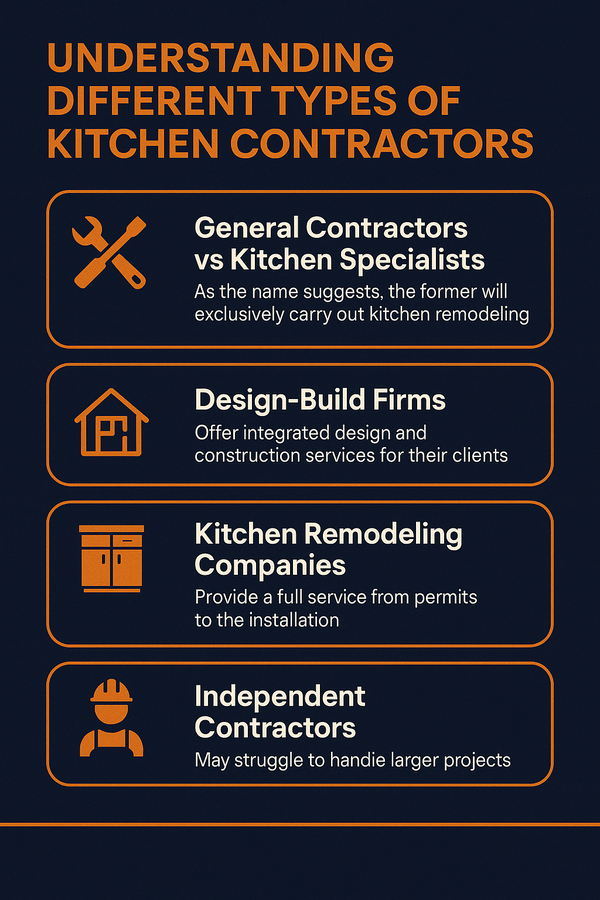
Understanding Different Types of Kitchen Contractors
General Contractors vs Kitchen Specialists
There are kitchen specialists and general contractors and as the name suggests the former will exclusively carry out kitchen remodeling.
Design Build Firms
Another option is a design-build firm that offers integrated design and construction services for their clients.
Kitchen Remodeling Companies
Kitchen remodeling companies offer a full-service from the permits to the installation and the final cleanup.
Independent Contractors
An independent contractor works alone and they may struggle to handle larger projects.
Essential Contractor Qualifications: The Three C's Framework
The qualifications for a professional contractor can be broken down into three key areas:
Competence and Experience
Choose a contractor that has been in business for five years minimum and this should be specifically in the kitchen remodeling field. Take a look at the contractor's portfolio of their most recent 10-15 remodeling projects that are similar to your budget.
The contractor should have expertise in plumbing, electrical, countertop fabrication and cabinet installation if they are offering a full-service.
Coverage and Insurance
The contractor should have general liability insurance with $1 million minimum coverage to protect against potential property damage to your home. This can be confirmed with the insurance carrier and you shouldn’t rely solely on a certificate review.
All employees and subcontractors should be covered for workers' compensation when they’re working on your property. Financial protection against the contractor should be in place if they default or fail to complete the work.
Credentials and Licensing
The contractor you choose should have a state contractor's license that can be verified through state licensing board databases. They must be familiar with the permit requirements and municipal building codes for your city.
Look for industry certifications, such as: National Association of the Remodeling Industry (NARI), National Kitchen and Bath Association (NKBA) and National Association of Home Builders (NAHB) memberships. The contractor also needs to be authorized to install the specific flooring, cabinets and appliances for your kitchen.

Step-by-Step Process to Find Kitchen Remodel Contractors Near Me
Step 1: Research and Initial Screening
Local Referrals
Start with local referrals if you can get one, ask your family, friends and neighbors about any recent completed kitchen remodeling projects.
Online Directories
Check potential contractors with online directories, such as: Better Business Bureau, Houzz, HomeAdvisor, Angie’s List and others.
Social Media Research
Take a little time to search for the contractor on social media for client testimonials and photos of recent projects they’ve completed.
Google My Business
Check the local search results for "kitchen remodeling contractors near me” that have an average rating of 4+ stars.
Check Trade Organization Directories
Search the NKBA, NARI and other trade organization member directories to find certified professional contractors in your area.

Step 2: Digital Vetting
Website Evaluation
When you’ve narrowed the field, take some time to evaluate the website of potential contractors. There should be plenty of information about recently completed projects with galleries to view.
Online Review Analysis
Read 15-20 reviews, checking the feedback over the last year.
Better Business Bureau Ratings
The contractor should also have a good rating with the Better Business Bureau for resolution and compliance.
Social Proof
Authentic social proof verification from clients is important with project details and satisfactory outcomes.
Step 3: The Contact and Questions
Response Time Evaluation
Evaluate the response time. You should expect a professional contractor to get back to you within 24-48 hours.
Phone Screening
Prepare ten questions covering availability, experience, insurance, licensing and more for the phone call.
Project Understanding
Ascertain their understanding of your project, the challenges that will need to be overcome and your specific needs.
Communication Style
The communications should be clear and professional and they should be happy to answer your questions.
Availability Timeline
If you’re satisfied, confirm that the contractor can start within your chosen timeframe.
The Interview Process: 13 Critical Questions for Kitchen Remodeling Companies
- How long has your company operated in the kitchen remodeling industry?
- Do you specialize in kitchen remodeling?
- How many kitchen remodeling projects have you completed in my price range during the past two years?
- Do you manufacture and install your own products or use specific suppliers?
- Can you provide me with current insurance certificates and license numbers for verification?
- Do you have liability insurance and workers compensation?
- Are your installers properly trained and certified by the manufacturers?
- Can you explain your project management process and your primary point of contact?
- Can you provide me with contact details for three recent clients with similar project scopes to mine?
- How do you ensure that your workmanship is high-quality for your clients?
- How would you handle change orders, schedule modifications and project delays?
- Will a designated project manager be on-site during construction?
- Do you have financing programs or do you have a preferred lending partner?
Getting and Comparing Kitchen Remodel Estimates
Multiple Quote Strategy
When you have a short-list of potential kitchen remodeling contractors, it’s a great idea to obtain three to five detailed estimates.
Estimate Components
The quotes should include labor, materials, permits, contingency allowances and cleanup.
Apples to Apples Comparison
To make comparisons easier, ensure that the specifications for the project are the same for every bid.
Red Flag Identification
Avoid any contractors that provide a quote that is 30% lower or higher than the average range.
Value vs Cost Analysis
When you analyze the value and costs, consider the reputation of the contractor, project timeline and warranty terms. Focusing purely on the pricing is often a poor barometer for success.
Financing Considerations
Examine the contractor-offered financing versus a traditional home improvement loan to check if the terms are more favorable.
Payment Schedule Evaluation
The payment schedules should be reasonable and tied to specific project milestones. Avoid contractors that ask for a large upfront payment before work commences.

Red Flags: Warning Signs to Avoid When Hiring Kitchen Contractors
Let’s take a look at seven red flags that you need to consider before you hire kitchen contractors:
- High-pressure sales tactics and “limited time” discounts.
- Door-to-door solicitation and canvassing for business.
- Lower than average quotes that can indicate hidden costs or corner-cutting.
- A lack of written contracts and poor or incomplete documentation.
- A request for full payment upfront or a cash-only transaction.
- An inability to provide current license numbers and/or insurance documentation.
- A lack of a physical address to visit in-person.
Contract Negotiation and Finalization
Detailed Specification
The contracts should specify the installation methods, materials, brands and models that will be used in the kitchen remodel.
Timeline Clarity
The start date, milestone deadlines and project completion dates need to be clearly stated.
Change Order Procedures
There need to be written processes to handle additions, modifications and any unforeseen issues that may arise.
Payment Schedule
The payment schedule should be tied to completed work phases and not dates on a calendar.
Warranty Terms
There should be comprehensive one-year warranties to cover the work and materials.
Permit Responsibility
Clarify who will be obtaining the necessary permits and code compliance.
Clean Up Provisions
Define the cleanup expectations to restore the job site to your requirements.

Conclusion and Next Steps
Taking the time to find the right contractor using the three C’s framework is important. Asking the thirteen questions and evaluating their detailed quotes should help you to narrow the field. Avoid any of the red flags we’ve covered in this guide to find the ideal contractor to meet your needs.