A bathroom remodel project seems exciting until you get stuck in comparing various bathroom countertop materials. From quartz, granite, marble, laminate, and lots of other countertop materials, you need to consider each material’s durability, aesthetics, costs, and maintenance. Avoid being overwhelmed and trapped by choosing the wrong material. This article will give you an extensive comparison of common bathroom countertop materials, their key features and the advantages and disadvantages of each.
Factors to Consider When Choosing Bathroom Countertops
Before delving into the bathroom countertop materials, you need to keep in mind these factors:
Durability
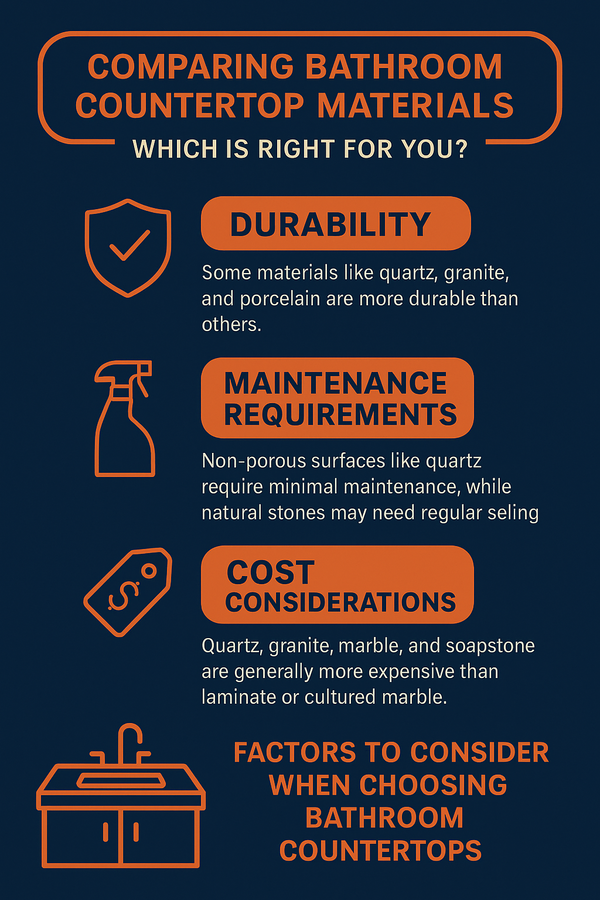
Some materials are more durable than others. Materials like quartz, granite, and porcelain are known for durability, while laminate and wood are vulnerable to heat, water, and heavy usage. You would prefer materials with the level of durability that matches your daily needs.
Maintenance Requirements
Countertop materials have varying maintenance requirements. Non-porous surfaces like quartz require minimal maintenance because they do not absorb water, liquids, and stains. On the other hand, natural stones such as granite and marble may need regular sealing to prevent staining. For your bathroom countertop, you would want a material that requires either easy or minimal maintenance.
Cost Considerations
While some materials are better than the others in terms of durability and aesthetics, they may be considerably more costly too. Quartz, granite, marble, and soapstone are generally more expensive. On the other hand, laminate or cultured marble are more affordable alternatives. Check the budget for your bathroom remodel project to determine how much you can allocate for the bathroom countertop material. If you can afford to spend a greater amount for your countertop, then you can opt for the more expensive and durable materials.
Design and Aesthetics
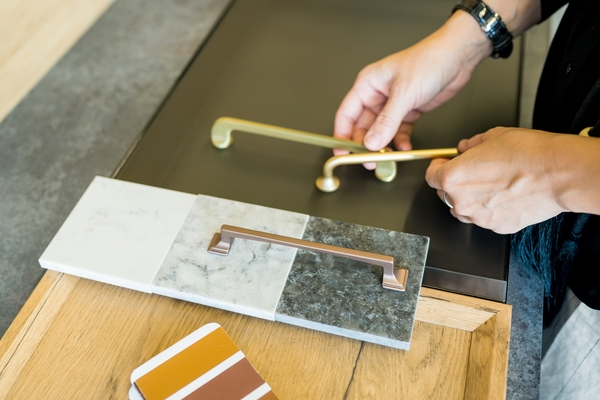
Each bathroom countertop material exudes a unique appeal that affects the space’s design and aesthetic. Solid surfaces and laminates are popular for modern and versatile designs. Bathroom designs that aim for luxurious appeal choose natural stones. What aesthetic vibe are you aiming for your bathroom remodel project? Choose your countertop material based on your target design.
Environmental Impact
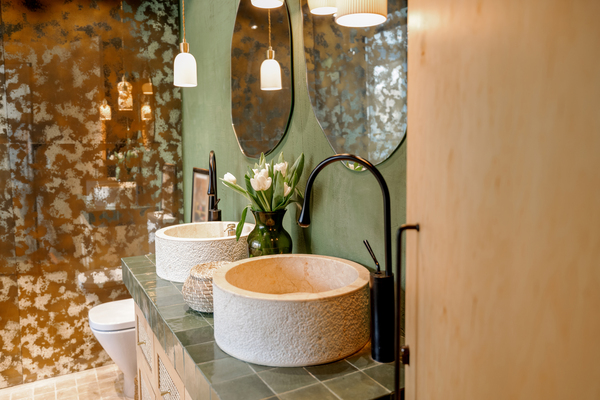
Sustainability of bathroom countertop materials is also increasingly being considered by homeowners due to environmental concerns. Some of the eco-friendly options are sustainably sourced wood and recycled glass. If you are looking for countertop materials with smaller environmental footprint, you need to be particular about where and how these materials are sourced. Be prepared to spend more time evaluating the source of your chosen material.
Comparative Analysis of Bathroom Countertop Materials
Quartz Countertops
Quartz countertops are engineered from natural quartz and resins. It is non-porous, durable, stain-resistant, and low-maintenance. Because it is man-made, it is available in diverse colors and uniform patterns for a predictable look, or it can be engineered to look like other natural stones. While quartz is made for durability and beauty, it is more expensive compared to other countertop materials like laminate. It is also less resistant to extreme heat than other countertops, so you may need additional accessories like hooks to hold hair dryers and hot styling tools. If you value longevity and low maintenance, quartz will be worth the high upfront cost.
Granite Countertops
Granite is a natural stone with unique colors. With its luxurious appeal, it is a top choice for bathroom remodeling projects that aim for sophisticated designs. Moreover, it is heat-resistant, so it is a great choice for vanity tops with hairstyling tools like blow dryer and hair straightening or curling irons. However, granite has low stain-resistance, so it may require regular sealing to prevent staining. If your bathroom countertop will be used for vanity and daily hairstyling needs, granite can be a practical choice.
Marble Countertops
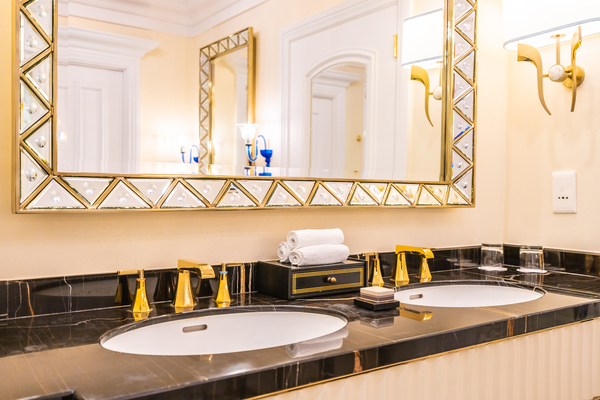
Marble is an elegant stone with a unique veining design. It is popular among homeowners who aim for a spa-like ambiance in their bathroom. Due to its light and reflective surface, small powder room designs can feel brighter and more spacious. Like granite, marble is also heat resistant. However, marble is expensive in terms of upfront cost, installation, and maintenance. This bathroom countertop material needs frequent sealing because it is prone to etching or discoloration due to exposure to acidic substances like cleaners. Marble is also prone to staining because it can absorb liquids, substances, and even mold. If achieving a luxurious spa-like design is your priority, you should be willing to invest in marble countertops’ professional installation, care and maintenance.
Laminate Countertops
Laminate countertops are made by layering decorative surface materials like printed paper or fabric layers covered by resin over a synthetic core. It is one of the most affordable countertop materials and most versatile in terms of design. It can mimic wood and stone looks including the expensive materials like granite and marble through advanced printing and finishing techniques. It is non-porous, water-resistant and stain-resistant. Laminates are easy to clean with just mild soap and water. However, laminate is less durable to heat and cannot be repaired once damaged. You might need to replace the entire laminate cover in case of severe damage. If you are doing a bathroom remodeling project for a rental property or a guest room, where durability is less critical, laminate countertops can be a practical choice. Likewise, if cost is your topmost consideration above longevity and value, you can also opt for laminate countertops.
Solid Surface Countertops
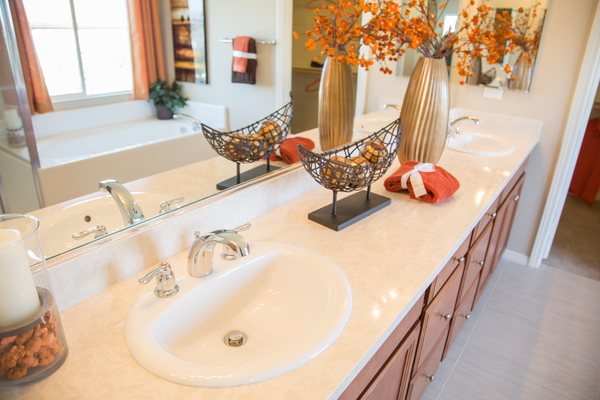
Solid surface countertops are a combination of various materials including natural minerals like alumina trihydrate, acrylic, and polyester resins. They are highly customizable and available in various colors and patterns. To appear as a continuous surface, pieces can be joined seamlessly during installation. It is non-porous and resistant to stain, molds, and bacteria. It requires minimal maintenance like cleaning with just soap and water, does not need sealants, and can be repaired in case of scratches and minor damages. However, it is less resistant to heat and may appear warped and discolored when heated. Solid surface countertops are the right one for you if you prioritize hygiene and low-maintenance. Moreover, if your bathroom countertop has an irregular shape or curves, solid surface countertops are good for their customized designs and seamless installation capabilities.
Porcelain Countertops
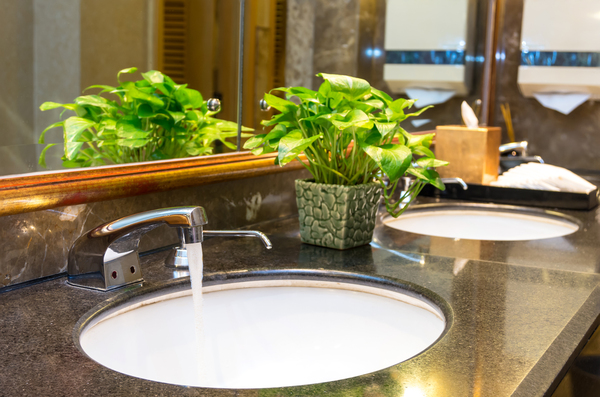
Porcelain countertops are made from natural clay and materials mixed under extremely high temperatures. They are dense and hard and resistant to heat, scratches and stains. Porcelain is similar to granite and marble in terms of heat-resistance and to quartz in terms scratch and stain-resistance. However, the edges and corners of porcelain countertops are vulnerable to chipping and cracking in case of impacts. Chips and cracks are often difficult to fix and may require replacement of the entire slab. Porcelain countertops also require high upfront costs for the materials and installation. If you are an environmentally conscious buyer, porcelain is a good choice because it is made from natural materials and has an eco-friendly production process. However, you must be cautious about protecting your countertops’ edges against impact like falling styling tools. You should also note that some homeowners dislike the cold surface of porcelain countertops.
Soapstone Countertops
Soapstone is a metamorphic rock with a smooth and soft texture that later on develops into a unique patina. It is highly resistant to heat so you can directly put hot tools on its surface without additional accessories like trivets which quartz typically requires. Unlike other natural stones, soapstone is non-porous, making it naturally resistant to stains and bacteria even without regular sealing. Soapstone is admired for its natural matte finish. Homeowners aiming for a rustic, farmhouse or vintage bathroom design prefer soapstone countertops. You should also note that soapstone is available only in gray color with green and blue undertones. Moreover, they are prone to scratches, dents, and chips. While they do not require regular sealing, soapstone countertops may need regular oiling to maintain its rich color. Soapstone is a premium material, but is less expensive compared to marble. If your target bathroom design is vintage or rustic and wants stain and bacteria-resistance with minimal maintenance, your best choice is soapstone countertops.
Wood Countertops
Wood countertops are made from natural woods like maple, oak, walnut, cherry, bamboo or teak. They are either solid wood slabs, butcher blocks, or planks glued together. They can be stained or finished with various colors to make it suitable for any bathroom design, but they are generally preferred in warm and organic aesthetics. Environmentally conscious homeowners prefer wood countertops using reclaimed wood. While wood countertops are vulnerable to scratches, dents, and moisture, they can be sanded out and refinished easily. However, they require regular sealing to protect against warping and rot. Adding an epoxy finish can create a plastic-like layer to shield the wood from direct contact with water, making it water-resistant. They also have low resistance to heat. If you prefer an organic look for your bathroom, prefer a material with low environmental impact, and are willing to invest time in regular maintenance, wood countertops are good for you.
Recycled Glass Countertops
Recycled glass countertops are pieces of recycled glass embedded into a base material like concrete, resin, and cement. They are available in a wide range of colors, finishes, and patterns customized for various modern bathroom designs. Like wood countertops, recycled glass countertops are also sustainable materials with less environmental impact. Yet, unlike wood countertops, recycled glass countertops are resistant to heat, stain, and scratches. However, like marble countertops, recycled glass countertops also have vulnerable edges and corners that are prone to chipping and cracking under impact. They can also be heavy and require reinforced cabinets for support. If you prefer eco-friendly materials that are also durable and can withstand moderate to heavy use, recycled glass countertops are a good choice for your bathroom remodeling project.
Cost Analysis
Budget Ranges
| Materials | Estimated price per sq. ft. |
|---|
| Low-cost | Laminate, Cultured marble |
| Mid-range | Quartz, Granite |
| High-end | Marble, Soapstone |
Conclusion
In choosing the best material for your bathroom countertop, weigh the pros and cons based on each material’s durability, maintenance, cost, aesthetics, and overall fit to your needs.
The table below summarizes the characteristics of bathroom countertops discussed in this article.
| Material | Features | Advantages | Disadvantages |
|---|
| Quartz | Engineered, non-porous, highly durable; mimics natural stone | Stain-resistant, low maintenance, wide style variety | Less heat-resistant than granite, higher cost |
| Granite | Natural stone with unique veining, durable, heat-resistant | Luxurious appeal, scratch and heat-resistant, adds value | Requires regular sealing, porous surface, higher maintenance |
| Marble | Elegant natural stone, veining adds unique design | Timeless beauty, heat-resistant, enhances small spaces | Prone to etching and staining, frequent sealing required, expensive |
| Laminate | Budget-friendly, available in various colors and patterns | Affordable, mimics stone or wood, easy to clean | Prone to heat and moisture damage, less durable, non-repairable once damaged |
| Solid Surface | Acrylic or polyester, seamless design, non-porous | Stain-resistant, repairable, allows for custom integrated sinks | Susceptible to heat damage, lacks natural stone aesthetics |
| Porcelain | Dense, heat-resistant, UV-resistant, seamless appearance | Low maintenance, heat-resistant, lightweight, versatile | Prone to chipping, difficult to repair, premium cost |
| Soapstone | Natural, smooth texture, develops patina over time | Stain-resistant, heat-tolerant, rustic aesthetic | Soft, prone to scratches and dents, requires regular oiling |
| Wood | Warm, natural aesthetic; customizable finishes | Eco-friendly options, repairable surface, timeless appeal | Requires regular sealing, susceptible to water damage and heat, less durable |
| Recycled Glass | Eco-friendly, made from glass and resin or concrete | Sustainable, unique appearance, durable against stains and heat | Prone to chipping, challenging repairs, higher cost, may require reinforced cabinetry |